
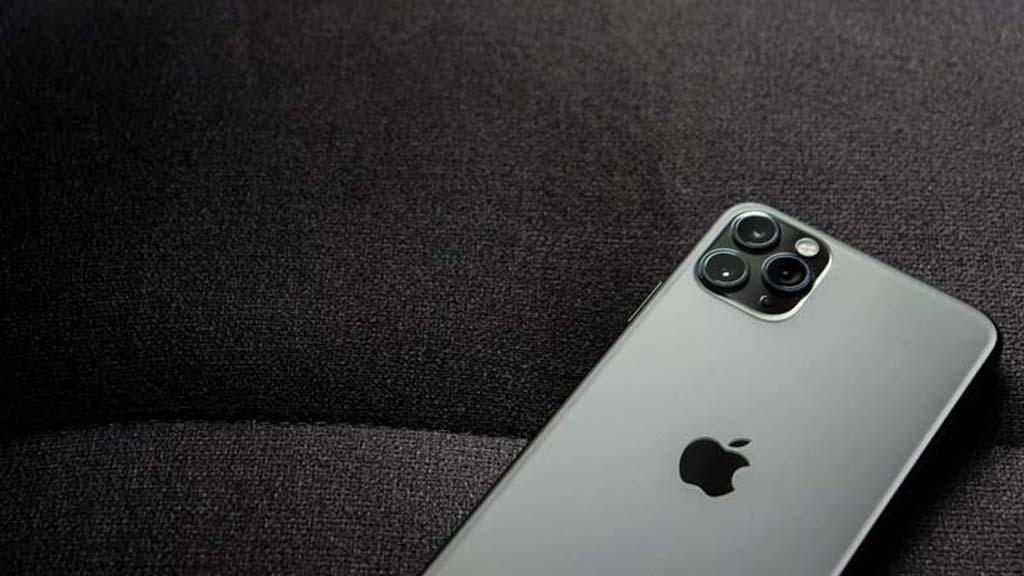
In your pocket right now sits more computing power than the world’s fastest supercomputer from the 1980s—machines that filled entire rooms, cost tens of millions of dollars, and required dedicated cooling systems. This isn’t hyperbole—it’s a technological reality that has fundamentally transformed human civilization in less than two decades.
The Unlikely Beginning
When IBM released the Simon Personal Communicator in 1994, it was a brick-sized curiosity that cost $1,100 and lasted one hour on a charge. It could send emails and had a touchscreen, but the world wasn’t ready. The device sold only 50,000 units and quickly faded into obscurity. The smartphone revolution would have to wait another 13 years.
On January 9, 2007, Steve Jobs walked onto a stage and announced that Apple was launching three revolutionary products: a widescreen iPod with touch controls, a revolutionary mobile phone, and a breakthrough internet communicator. The audience erupted when they realized these weren’t three separate devices—it was one product called the iPhone.
The Numbers Are Staggering
Today, there are more smartphones on Earth than people—over 8 billion active devices. Humans check their phones an average of 144 times per day. We spend roughly 4.5 hours daily staring at these glowing rectangles, which adds up to over 76 days per year, or roughly one-sixth of our waking lives.
The smartphone industry generates over $500 billion annually, making it one of the largest consumer electronics markets in history. Yet the most expensive component in your phone—the processor—costs manufacturers only about $40 to $70, even in flagship models.
The Hidden Engineering Marvels
Modern smartphones contain more sensors than many scientific laboratories had access to just 30 years ago. Each device typically includes accelerometers, gyroscopes, magnetometers, proximity sensors, ambient light sensors, barometers, GPS receivers, and increasingly, LiDAR scanners. Your phone knows when you’re walking, driving, or sleeping. It knows your altitude, your orientation in three-dimensional space, and can measure minute changes in air pressure.
The camera technology represents perhaps the most dramatic evolution. Early smartphone cameras captured grainy 0.3-megapixel images. Today’s computational photography combines multiple exposures taken in milliseconds, applies artificial intelligence to enhance detail, and can simulate depth-of-field effects that previously required expensive DSLR cameras with large lenses. Some phones can now capture 200-megapixel images and record 8K video—resolutions that exceed what most professional cameras offered just five years ago.
The Unintended Consequences
Smartphones didn’t just change communication—they demolished and rebuilt entire industries. Taxi companies that operated for decades vanished within years of Uber’s launch. Hotels faced existential competition from Airbnb. Entire categories of products became obsolete: alarm clocks, cameras, GPS devices, music players, portable gaming consoles, flashlights, calculators, and voice recorders all collapsed into a single device.
The social transformation proved equally profound. Dating shifted from chance encounters to algorithmic matching. Photography evolved from carefully composed moments to billions of casual images uploaded daily. Social movements that once required months of organizing now mobilize millions within hours through viral hashtags.
Mental health researchers have documented both benefits and costs. Smartphones provide unprecedented access to information, social connection, and mental health resources. Yet studies increasingly link excessive use to anxiety, depression, and sleep disruption. The average person now experiences “phantom vibrations”—the sensation that their phone is buzzing when it isn’t—several times per week.
The Paradox of Connection
Perhaps the most fascinating aspect of smartphones is their paradoxical nature. These devices connect us to anyone on Earth instantly, yet many researchers observe increasing feelings of isolation and loneliness in heavily smartphone-dependent societies. We can video call family across continents but struggle to maintain eye contact with the person sitting across the dinner table.
Smartphones have also created new forms of inequality. In developing nations, they’ve enabled millions to access banking, education, and healthcare for the first time, leapfrogging traditional infrastructure. Yet the “digital divide” persists—those without smartphones or reliable internet access face growing disadvantages in education, employment, and civic participation.
What’s Next?
The smartphone revolution may be approaching a plateau. Recent models offer incremental improvements rather than transformative changes. Industry analysts predict the next major shift will move computing away from handheld screens toward ambient computing—wearables, augmented reality glasses, and artificial intelligence assistants that fade into the background of daily life.
Yet for now, the smartphone remains humanity’s most intimate technology. It’s the last thing millions of people see before sleep and the first thing they reach for upon waking. It knows your location history, your communication patterns, your interests, and increasingly, your health metrics. It mediates your relationships, your entertainment, and your understanding of current events.
In less than 20 years, this pocket-sized slab of glass, metal, and silicon has become an extension of human consciousness itself—a digital prosthetic that enhances memory, navigation, and social connection while potentially atrophying skills our ancestors took for granted. Whether that trade-off represents progress or peril remains one of the defining questions of our era.
The smartphone revolution isn’t coming—it already happened. We’re living in its aftermath, still discovering what it means to be human in a world where everyone is always connected, yet somehow, often feeling more alone.